

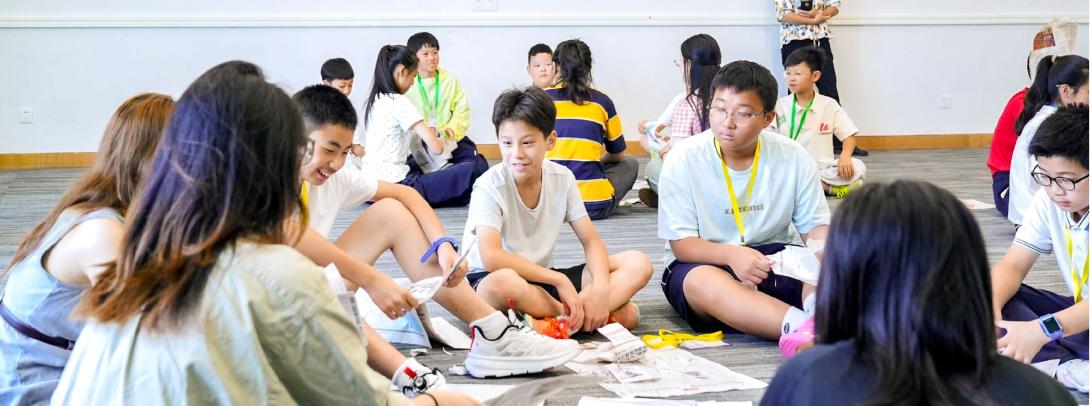
In July, NYU Shanghai welcomed 42 Shanghai-based migrant children to the College and Career Lab (NYUSH CCL). Over two weeks, campers took part in activities centered on sharing, creativity, and collaboration.
The free summer camp, now in its fifth year, began in 2020 as a partnership between NYU Steinhardt Associate Professor Hua-Yu Sebastian Cherng, NYU Shanghai’s Office for Community-Engaged Learning (CEL), and Associate Professor of Psychology Cui Lixian. Designed around the developmental needs of migrant children in the city, the camp focuses on self-discovery, social-emotional learning, and college and career exploration.
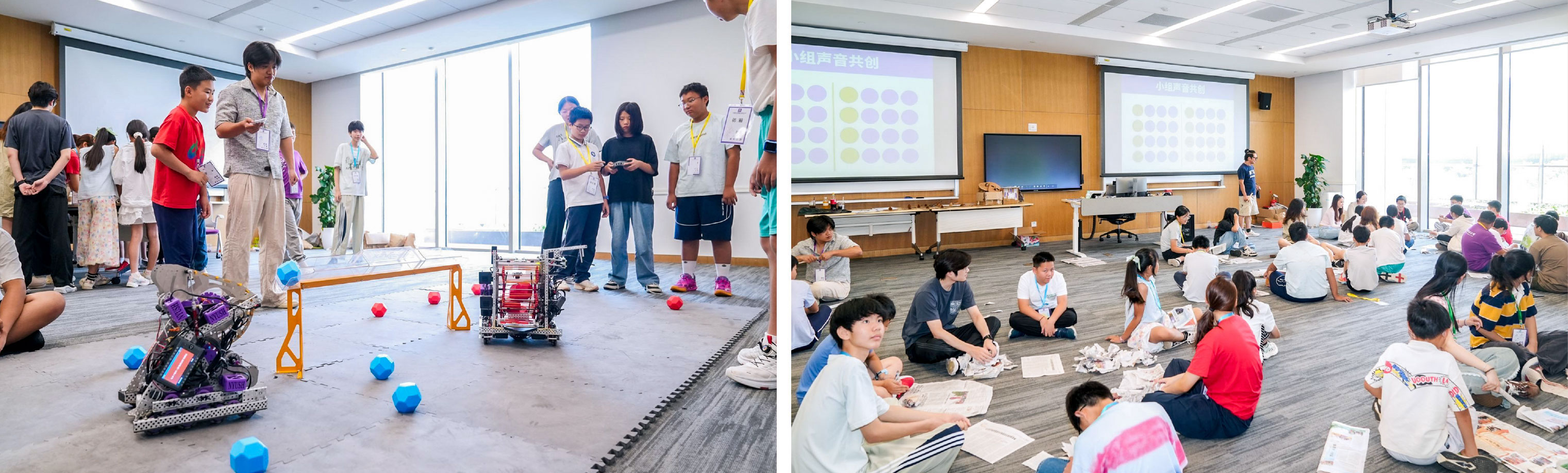
This year’s program introduced several new offerings, including workshops on sound-based theater, career exploration, and robotics. The camp’s curriculum and activities were coordinated by NYU Shanghai alumna Zhang Yaqi ’23, who first began as a Camp Counselor when the program began. Zhang, who earned a master’s degree in education from Harvard and was a Teach For China fellow, returned to campus as a research assistant and led camp activities alongside drama instructor Xiao Hua.
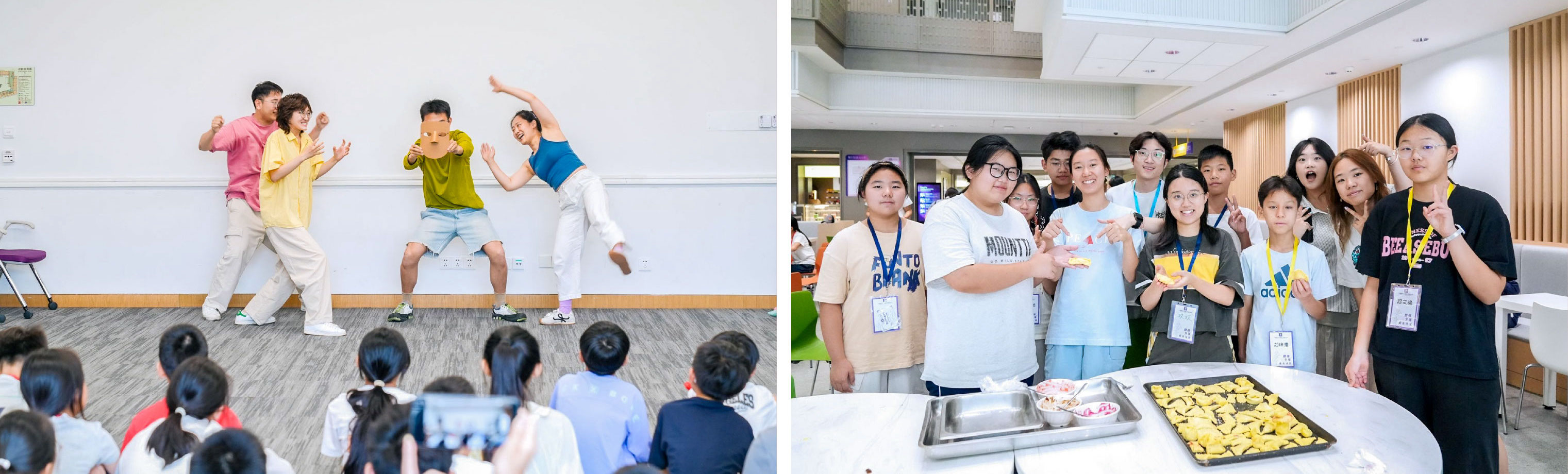
Fourteen NYU Shanghai undergraduates served as counselors, as part of an academic service-learning course they took on social and emotional learning and intervention for migrant youth taught by Professor Cui. Drawing on what they learned in the course, the counselors guided campers through a wide range of activities and accompanied them throughout their journey of exploring their interests.
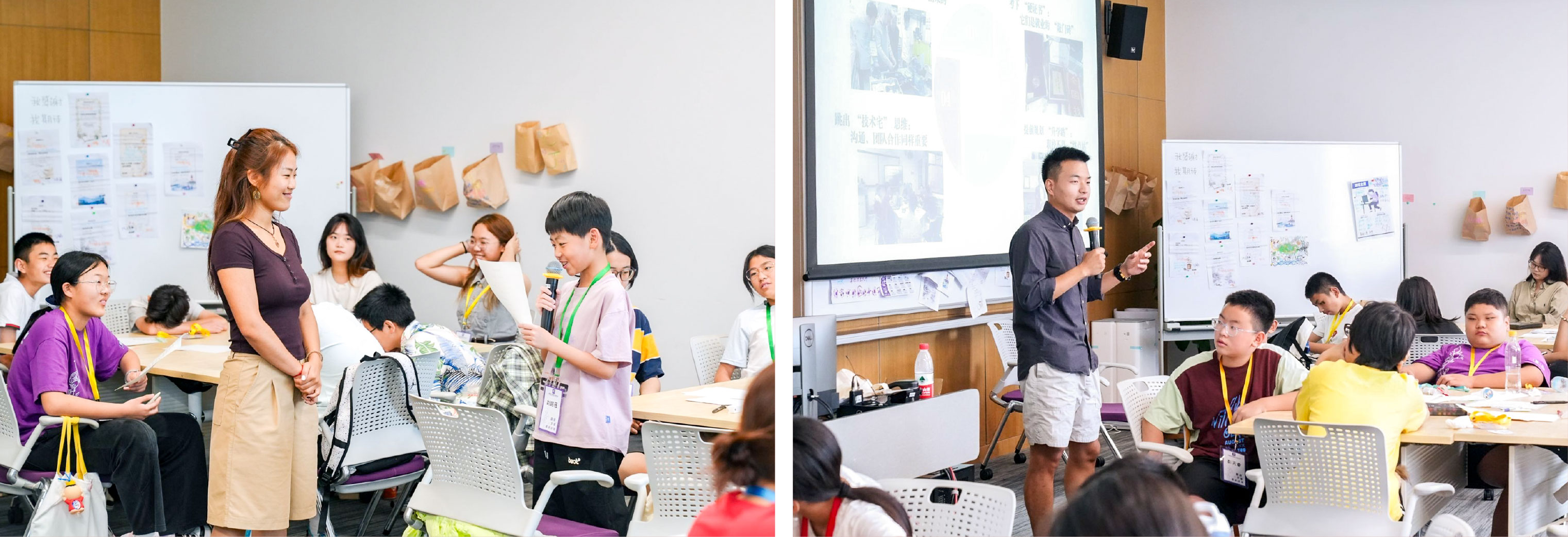
Drama education has always been a core part of the camp, as a way to help campers express their emotions through movement. Ninth grader Xinyi explained why she enjoyed the activities. “I’m not very good at putting my thoughts into words, and people don't always understand what I'm trying to say,” she said. “I really enjoy expressing what's on my mind this way. I can move freely and just be myself.”
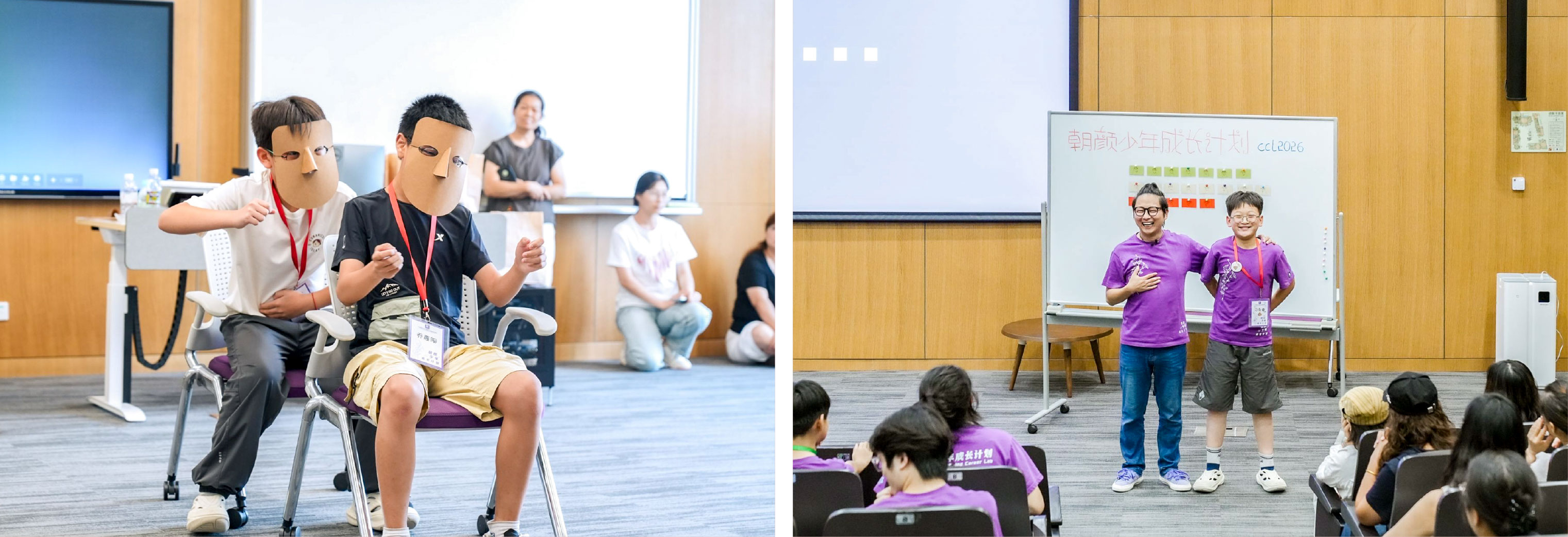
Right: Xiaohua (left) guided campers in presenting their drama exercise.
This year’s addition of sound-based theater allowed the campers to create their own stories using a variety of sound effects to bring their performances to life. Zhang said the workshop was designed to lower the barrier to self-expression and encourage every child to participate.
“The process helps them learn to listen to one another, work as a team, and collaborate toward a shared goal,” she said. “At the same time, it encourages them to express themselves freely, use their imagination and creativity, and find their own ways to participate.”
“At first, I didn't really see what was so fun about it,” said Haochen, a first-time camper whose older brother joined the camp two years ago. “But as everyone started creating sounds together and performing in the theater piece, it turned out to be really interesting.”
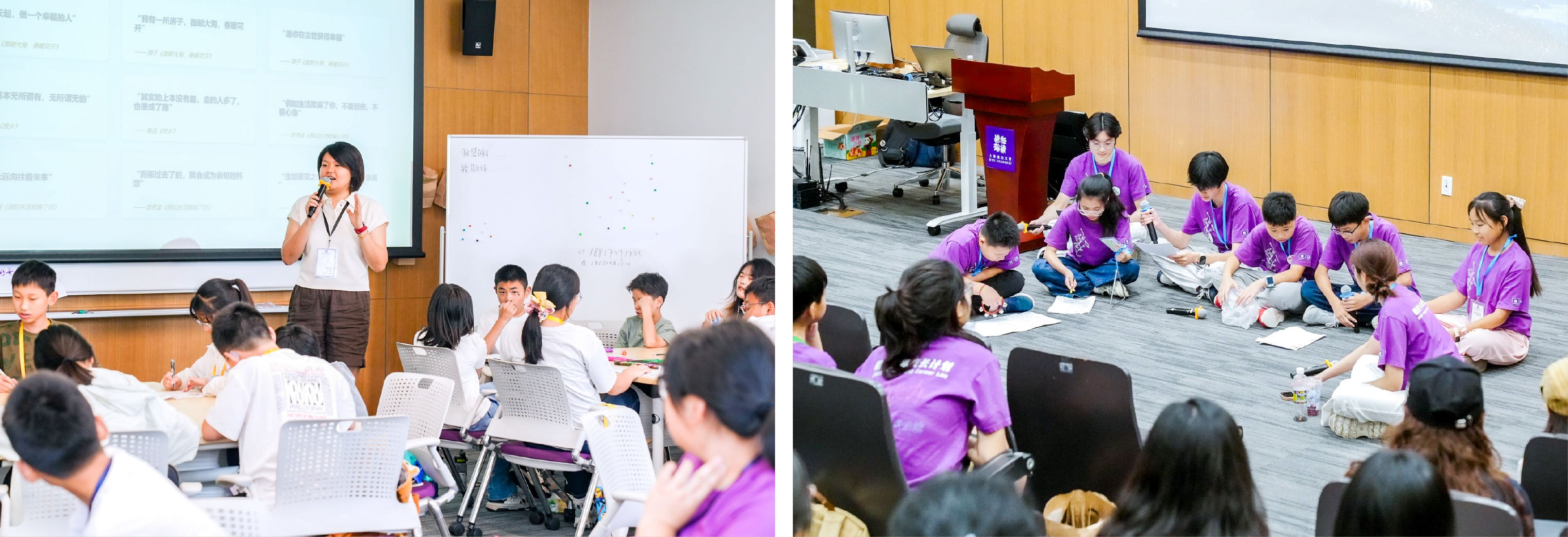
Right: At the closing ceremony, children performed their own audio-based stories.
The campers also got a chance to expand their worldviews by interacting with people who have taken different life paths. This year, they heard from Clinical Associate Professor of Music Chen Wei, head chef of NYU Shanghai’s cafeteria Yao Qi, and older migrant youth who have gone on to college and careers, including NYU Shanghai alumna Kong Xiaoyan and vocational school teacher Lin Chuangchuang.
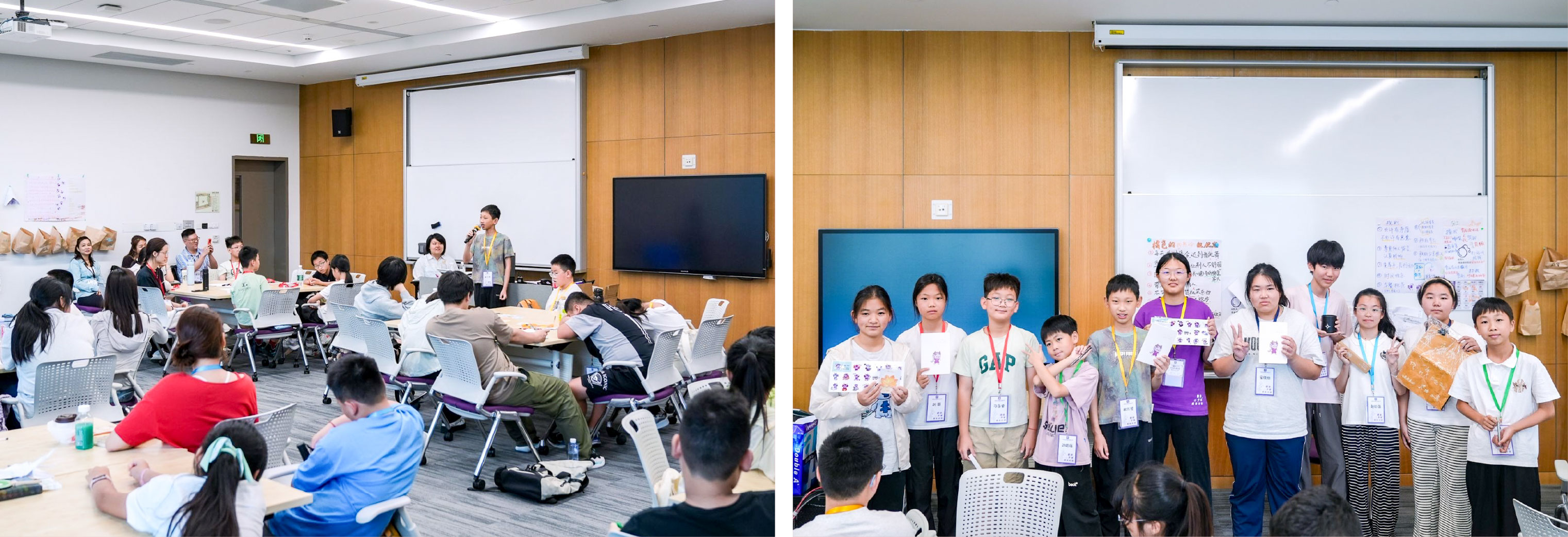
Over the two weeks, student counselors and children built close connections. “One girl in my group was quite shy when she first arrived,” recalled counselor Shuang Hanzhi ’27. “As we spent more time together, she became increasingly outgoing and proactive. Seeing her growth and transformation was truly inspiring.”
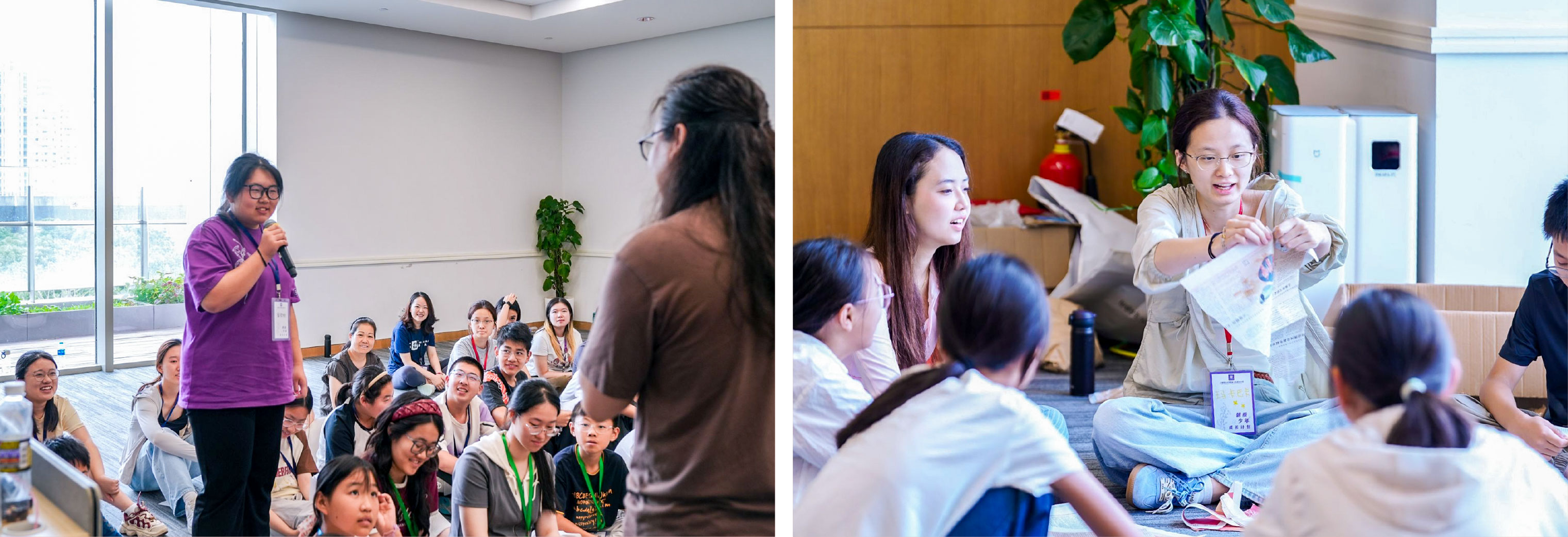
Counselor Li Yuxing ’27reflected that she gained just as much from the experience. “Their maturity taught me things no textbook could,” she said.
Jin Baosheng ’28 and other counselors said the experience truly benefited both campers and counselors concluded, “It is about mutual influence, learning, and growth through shared experiences,” he said.
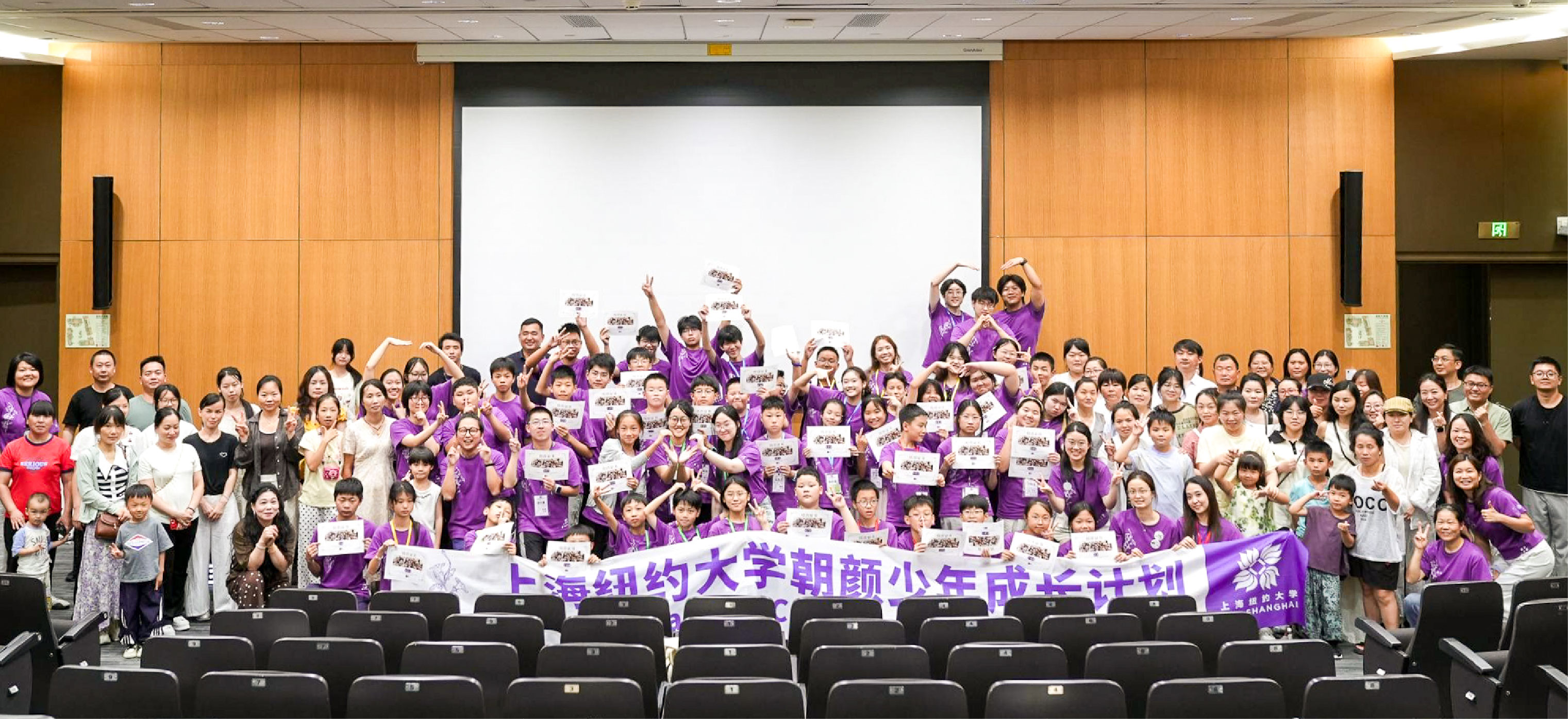
Student counselors
Li Yuxing ’27, Shuang Hanzhi ’27, Xiao Bang ’27
Jin Baosheng ’28, Mia Lin ’28, Ren Aining ’28, Zhang Yuanxi ’28
Fang Zhou ’29, Han Jiatong ’29, Li Yueyao ’29, Liu Yiyang ’29, Meng Xinyi ’29, Tu Xinli ’29, Zhang Keqin ’29